“This post contains affiliate links, and I will be compensated if you make a purchase after clicking on my links.”
Can humans catch worms from dogs.? The answer is yes. So, it is essential to teach your children to wash their hands before eating. Furthermore, regularly treating your pets for worms is as important.
Can Humans Catch Worms from Dogs and Cats?
Catching worms from the family dog is not common but is possible.

Infants and toddlers are more susceptible to catching worms from pets. This is because their immune systems is still developing and they often have poor hygiene.
Can humans, especially children, catch roundworms from dogs?
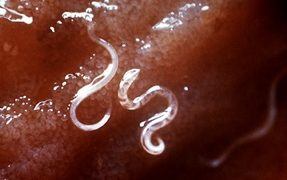
Roundworms are the most common parasites in dogs’ digestive system. They can only spread to humans by ingesting roundworm eggs.
This can happen when a child comes in contact with contaminated soil or sand. And then transfer eggs to the mouth through dirty fingers or by putting dirty objects in their mouths.
Visceral larva migrans (VLM) is a disease that can affect humans. And this is caused by roundworms.
VLM, also known as Toxocariasis, is a potentially serious disease that can affect the eyes and other organs.
Toxocara canis (dog roundworm) and Toxcara cati (cat roundworm) live in the intestine of dogs and cats, causing VLM. It is worth noting that Toxcara Cati can infect dogs when they eat cat feces.
After the eggs are inadvertently eaten, they hatch in the human intestine. And then the larvae find their ways to organs, including the liver, lungs, heart, brain and eyes.
Most VLM patients are children between the ages of two and four years. Usually, they become infected after playing in sandboxes or soil contaminated by pet feces. It is worth noting that eggs can survive in soil for as long as seven years.
Keeping children from playing in contaminated soil and teaching them to wash their hands help prevent VLM.

Toxocara eggs can only infect if they have been in the environment for approximately two weeks. So direct contact with an infected animal generally does not result in transmission.
Can humans, especially children, catch Hookworm from dogs and cats?
Hookworms are intestinal parasites most common in dogs, but are also found in cats. You can find these parasites in tropical and subtropical areas.
In animals, the hookworm attaches to the inside of the intestinal wall by means of a hook-like mouth and feed on the blood of the host. The animal’s feces are where you’ll find these.
Hookworm is transmissible to humans via soil contaminated by cat or dog feces. And the eggs are deposited into the soil.
The larva, which hatches from the eggs, can infect a human either by ingestion or by penetrating the skin.
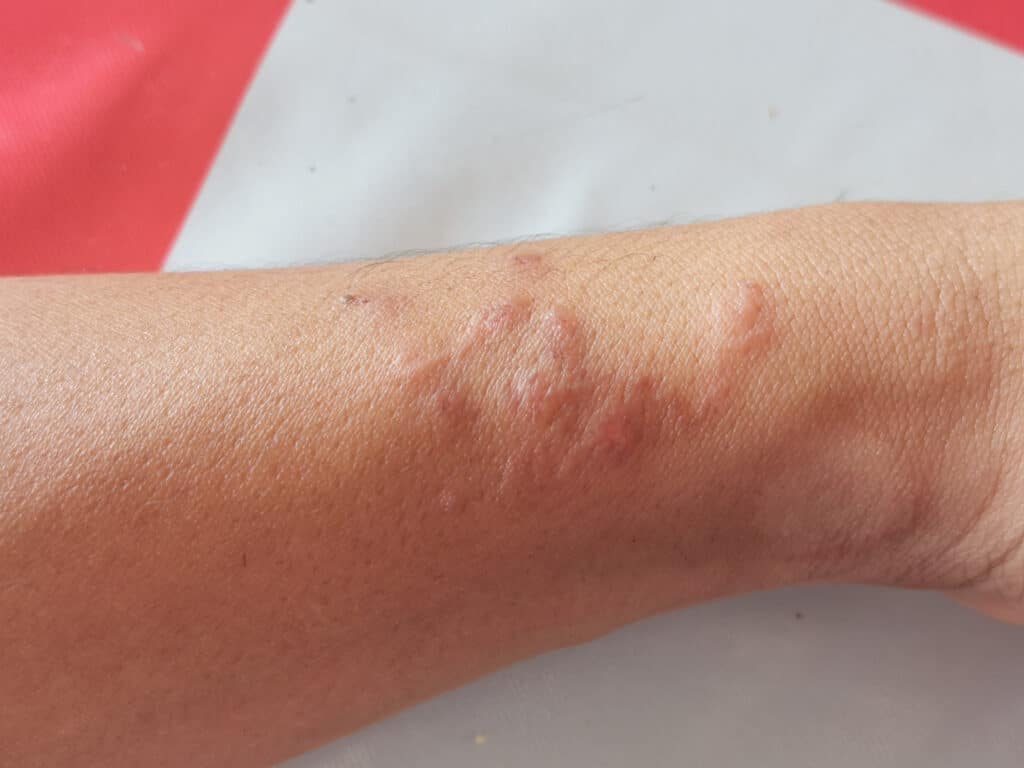
In skin penetration, humans can develop a characteristic itchy rash called cutaneous larva migrans, or creeping eruption. The rash looks like a snake-like tract with blisters. This is because the hookworm larvae travels under your skin.
In humans, when the hookworm enters via the skin, it does not find it’s way to the intestines.
Children or adults can become infected through the soles of their feet or on the buttocks. These happen when they walk barefoot or sit in a hookworm-infected area.
Can humans, especially children, catch ringworm from dogs?
Contrary to its name, ringworm is not a worm at all but a fungus called Dermatophytes. This means ‘plants that live on the skin’. And the fungus causes circular lesions on the skin.
Ringworm is very contagious and can spread from cats, dogs and other animals to humans and visa versa.
But contrary to popular belief, threadworms don’t causes ringworm. And the most likely transmission of threadworm is from other children.
Dog tapeworm transmitted to humans
Dipylidium Caninum is the most common tapeworm in dogs and cats. And it is unusual for a human to become infected with tapeworms from dogs or cats.
In order for a human to become infected with Dipylidium Caninum, they must ingest an infected flea and this doesn’t happen often. Pets, on the other hand, often ingest fleas whilst grooming.
Can you catch heartworm from your dog?
No. Heartworm is transmitted by mosquitoes not dogs or cats. And humans are not a natural host for heartworm.
The importance of worm control in cats and dogs

To help protect your family from catching worms from your pets, it is essential that you de-worm your pets regularly.