“This post contains affiliate links, and I will be compensated if you make a purchase after clicking on my links.”
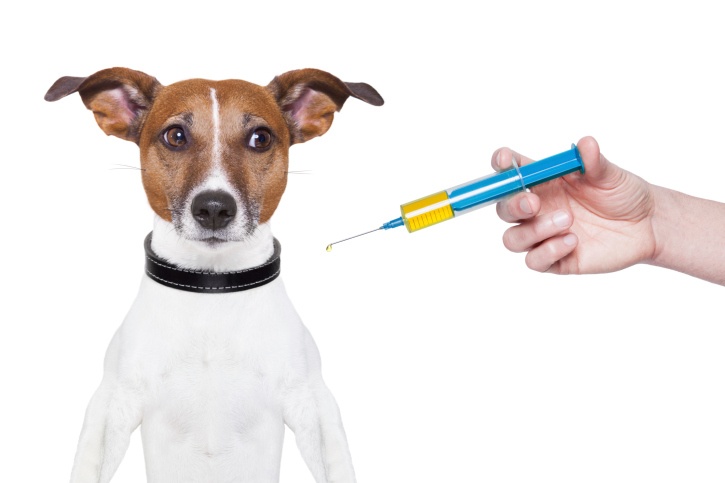
This is one of the most controversial aspects of treatment in medicine. While we would love to think that Big Pharma has our best interests at heart, what we know is that animals who’ve been repeatedly vaccinated, suffer the most debilitating illnesses. The saddest part is that once your pet’s health has been compromised by drugs and/or vaccinations, it is quite a struggle to get it back. What we’re all seeking for our beloved dogs, cats and our kids too is something called “natural immunity.” We want to stand alone, be self-governing and own our own health outright. I’m going to help you to discern how to do this. But first, with a little help from my friend, I’m going to illustrate what went wrong.
If you’re not vigilant, your pets health will be hijacked. Big Pharma appraises only it’s own drugs, gives kickbacks to government officials, and in turn, there is no mechanism to take them to court should you want to prove that your dog died from a vaccine. My dear friend, and colleague, Aleksandra (Aleks) Mikic wrote in her book “How To Immunize Your Dog Without Vaccines” about big Pharma’s goal to stage the decline of your health here,
“Do you doubt it? Do you think that nobody could be that cruel? Then you need to read the report by Robert F. Kennedy Jr. published June 16th, 2005. Under the Freedom of Information Act, he managed to obtain transcripts of the secret meeting which took place in June of 2000 at the Simpsonwood Conference Center. The meeting was convened by the Center for Disease Control (CDC). Fifty two private invitations were issued, no public announcement was ever made. So, who made up this secret panel? Officials from CDC, FDA, vaccine specialist from the WHO (World Health Organization) in Geneva and representatives from every major vaccine manufacturer in the world.
The participants of this meeting were reminded, repeatedly, that they could not photocopy any documents, could not take notes and could not leave with any papers in their possession. They were presented with the results of a study – a huge database containing medical records of 100,000 children – irrefutably proving that thimerosal (mercury in the vaccines) was responsible for the epidemic of autism and other neurological disorders. There is actually more to it than just the mercury, but more on that later.”
She goes on to state,
“CDC even paid the Institute of Medicine to conduct a new study and ordered researchers to rule out the link between mercury and autism. This just goes to show you how reliable their ‘double-blind’ clinical studies really are. Maybe they call them double-blind because they manage to blind both the researchers and the public? Other scientists were told that the data from the original study was lost and couldn’t be replicated. Can you imagine anyone falling for that explanation? How exactly do you misplace the medical records of 100,000 children? That’s not a tiny bit of paper. Senator Bill Frist received $873,000 in contributions from the pharmaceutical companies and consequently did everything he could to shield them from the harm (aka justice). Several times he tried to seal off vaccine-related documents, including Simpsonwood transcripts and he introduced provision which would deny compensation to children suffering from brain damage induced by the vaccine. And what about the children? Well, they didn’t make any contributions, so they weren’t relevant.”
Big Pharma are the same unethical giants supplying your vet with drugs and vaccines for your dog. I also know that after having animals in my care both personally and professionally for the last 20 years, that animals treated holistically to remove the shocks and traumas on their timeline, in addition to the removing the vaccine insults and the inherited Genetic Miasms using homeopathic principles that a pet’s health will be wholly restored. Mikic states, “For a true physician, sacrifice is not an option. A truly scientific medical system is a system without sacrifice … You will be able to immunize your dog without even seeing a vet. Now, that’s empowerment.”
Natural immunity is being so whole and strong that anytime an errant microbial or viral agent enters your midst that your immune function is so sound and healthy that it dismisses it with a sharp backslap. Your defenses so marshalled that any marauding disease can’t find any real estate to engender itself like a pregnancy. How do you get here with your own health and with your own dog? First of all really, and truly look at your value system, your ethical center. What feels right to you? There are two forces in life running inside you like two subway trains, one perpetuates life and the other death, which one do you prefer to ride? It is important to consciously make a choice and then the activities you choose will wholly speak to this as a natural outcome.
As mentioned above, our bodies have inherent forces for growth and life and also for death and destruction. The subway train for life needs to be fed with nourishing, whole and raw foods while also being unencumbered by life’s losses, rage, guilt, antibiotic use, trauma, and the genetic predisposition to diseases like ringworm, cancer and lyme. You can’t get a disease unless you create the conditions ripe for it. This is the death train. Think of the broccoli in your fridge. Over time, it just decomposes if it does not retain the forces intrinsic to life. This is true for you too.
In humans, and animals, we promote life using life giving local raw foods. You’re alive and you need foods that are also alive. Food goes dead by sitting on a truck for days or by pesticides, herbicides or through genetic modification (GMOs). Kibble is also dead food! Wilhelm Reich knew that once the life energy, he termed orgone, was bled from the organism, death ensued.
To promote life, we need love, touch, to feel understood, and validated. Your dog needs all of this too, in addition to also relieving the physical and psychic traumatisms. It is important to give probiotics in the way of acidophilus and bifidus and also immunize your pet with homeopathic immunizations. We call this latter jurisdiction “homoprophylaxis.”
We can immunize you, your child or your pet for anything that you can think of. We’ve been using Dr. Isaac Golden’s protocols with 99% efficacy as a community for over 20 years now. The homeopathic principle Like Cures Like is safe, efficacious and soundly gives your family and pets true immunity without any chemicals, adjuvants (preservatives), animal embryos, or heavy metals like mercury or aluminum or live or dead viruses from other hosts.
Aleks continues to illustrate in her book, “How To Immunize Your Dog Without Vaccines,”
“Dr. Bob Rogers, a veterinarian from Texas, said in a radio interview: “In 1997, I went to a seminar where Dr. Ron Schultz, probably the most prominent immunologist in veterinary medicine said that giving vaccines like rabies, distemper and parvo annually had no effect. I went back to my practice and changed my vaccine recommendations as I can not in good conscious charge a client for something that does nothing, especially when I know that there is a risk involved. I was very surprised over the years to see that nobody else was changing… But the drug companies have disseminated a lot of false information; they come into town, buy dinners at the most expensive restaurant for all the vets and present a seminar on vaccines where they misconstrue the studies, they omit the most current studies, and they conclude that we should go on vaccinating every pet for every disease known to man, every year… I went to the Texas State Veterinary Board; their mission is #1 to protect the public and #2 is to elevate the standard of practice. I merely asked them to encourage vets to get continuing education on vaccinations and to stop allowing continuing education where the speaker is a paid employee of a drug company because that is a big conflict of interest. I think that was a very reasonable request and they refused.”
Catherine Diodati, MA wrote a book entitled, “Vaccine Guide For Dogs and Cats; What Every Pet Lover Should Know” and in it she describes how, “Homeopathy provides a variety of remedies and nosodes that are effective in the prevention and treatment of disease, and, in fact, in the treatment of many vaccine-induced adverse events.”
Like Aleks and us, here at Arcanum Wholistic Clinic, Dr. Susan Beal, DVM, a holistic veterinarian in Pennsylvania, also uses prophylactic homeopathic nosodes for pets by “filling a chink in the armor through which the naturally occurring disease would have entered.” We know that the nosodes enable the organism to safely mimic, without causing an ounce of harm, the state that it has already had the experience of the disease. When the pathogen tries to take up residence in the organism, there is literally a “No Vacancy” sign in their window.
As we know from Dr. Samuel Hahnemann, the father of Heilkunst Medicine and the luminary of homeopathic principles, cited that more than two diseases can not take up host in an organism at the same time. If the nosode is already, “filling the chink” the natural disease just bypasses the organism due to its already established occupancy.
Canine vaccines that we use, the homeopathic nosodes, to cover your dog for include:
- Parvovirus type 2
- Coronavirus Enteritis
- Distemper
- Infectious Canine Hepatitis
- Kennel Cough (B. Bronchiseptica and Parainfluenza)
- Leptospirosis
- Lyme Disease
- Rabies
It was Patty Smith and Rudi Verspoor who first established the use of sequential treatment for pets, and humans, based on French Physician Dr. Elmiger’s research. Rudi was in an airport in France when he spotted the book titled “Real Medicine” and devoured its contents during a flight back to North America. Science demands that we follow the order of time and Heilkunst Physicians are the only sequential therapists in the world who are wholly trained in the art and science of peeling the onion of your pet or human with the acumen of 30 years experience behind them. As Dr. Diodati cites about Homeopathic treatment, “By the time they reach the deepest layers associated with the symptomatology, the patient often experiences complete recovery, or at the very least, a significant improvement in their quality of life.” Isn’t this what we all want?!
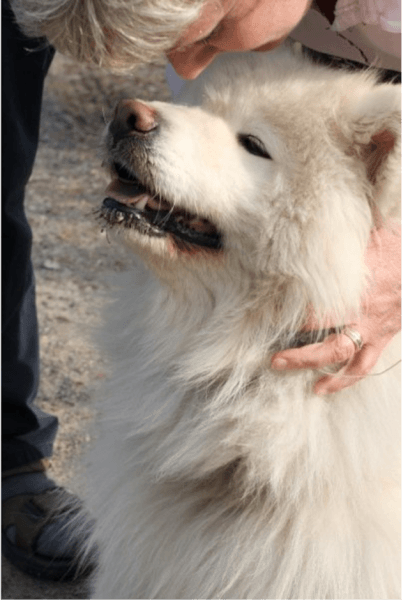
Allyson McQuinn, DHHP, JOAH has been studying natural medicine for over 20 years. Working as a Physician with both humans and animals in her international practice at Arcanum Wholistic Clinic by Skype and by phone, she is able to effectively prescribe and ship remedies worldwide.
She has also authored over a dozen books, one of them being “Natural Home Pharmacy For Dogs; How to Use Practical Tips, Homeopathic Remedies, Nutrition, and Training for Your Dog’s Natural Health” available on Amazon. Allyson’s beloved “Sammy” Terra is just one of many rescued animals she’s treated using natural remedies on her farm.