
“This post contains affiliate links, and I will be compensated if you make a purchase after clicking on my links.”
We’re all in agreement here – dogs are simply amazing. But, there are few things more annoying than a dog that barks nonstop, especially if it’s not your dog.
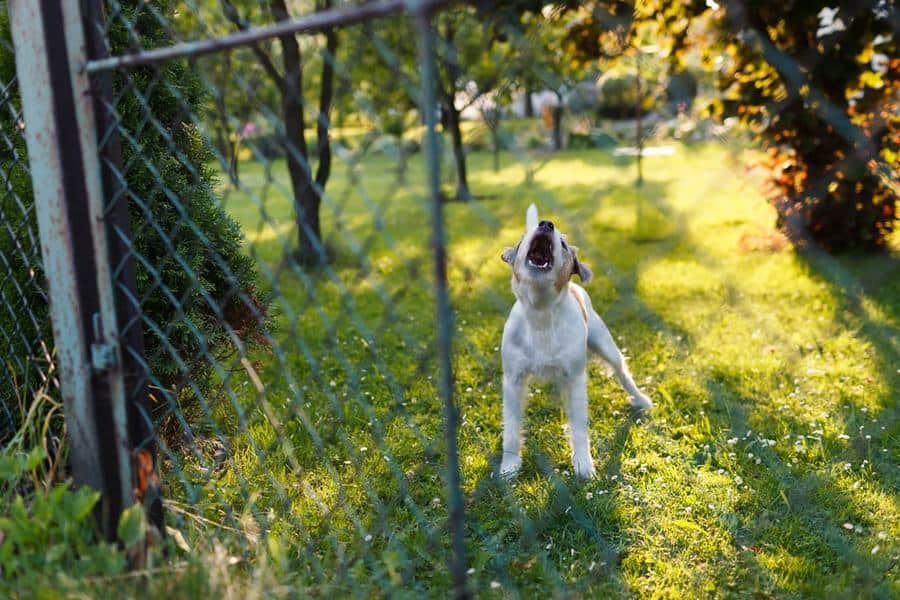
Perhaps you work a night shift and can’t sleep during the day because a neighbor’s dog is barking nonstop; or you have just put your baby down for a nap, only to have her sharply awakened thanks to the dog a couple doors down. It could be that you work from home and can’t jump on a call without everyone hearing your neighbor’s noisy pup.
Stopping a neighbor’s dog from barking can be frustrating and challenging. At least when it’s your dog, you can address the core problem, which is generally attributed to boredom, fear, or a lack of exercise. But when it’s your neighbor’s dog, the problem is not as easily addressed.
Fortunately, there are some things you can do to put an end to incessant barking.
1. Document the problem.
Documenting the barking is helpful not only to your neighbor, but to the authorities should you have to contact them. Keep an accurate record of the when the dog barks. A calendar is helpful and will give you room to document the times when barking occurs.
If you’re like most dog owners, you can distinguish between an “alarm” bark or a “boredom” bark. Make a note of the type of bark you feel it is. You may even begin to see the problem. For instance, if barking only occurs on specific days, it could be that a recurrent event is setting the dog off (maybe garbage trucks set him off on Tuesdays and gardeners on Fridays). The times of day that the dog barks may also be a good indicator of why he’s barking (perhaps kids getting out of school are annoying the dog). This not only gives you tools to work with, it can help the owner determine what’s happening if they aren’t home all the time.

2. Address the problem with your neighbor.
Most people dread confrontation, so it’s best if you approach your neighbor calmly and compassionately. In many cases, people are not even aware that their dog barks all day as they work away from home. Or, perhaps your neighbor knows their dog is barking, but isn’t sure how to solve the problem. Staying calm and factual will help you get further with the person – show them your notes and any let them listen to recordings you might have.
If a person chooses not to answer the door, or refuses to speak with you, leave a note. Make sure you record the date you left the note and whether or not you think they received it.

3. Give your neighbor some helpful suggestions.
If the neighbor is receptive to your help, suggest a few solutions to give them a hand. Even if you don’t know or understand dog behavior, consider the following suggestions:
If the dog is spending long hours alone in the back yard, there’s a good chance he’s barking to expend pent up energy. A doggy daycare or employing a dog walker might be all it takes to keep the peace. If your neighbor is unwilling or unable to provide additional exercise during the day, suggest they incorporate brain-games into their dog’s routine. Treat puzzles are an excellent way to exercise a dog’s brain. Mental exercise is as vital to a dog’s health and well-being as physical exercise.
If the dog is barking from inside your neighbor’s home or apartment, suggest they begin using a crate while away from home. Crate training is a simple, humane way to modify unwanted behavior in dogs. If you’re not sure how to crate train a dog the right way, check out this guide: Crate Training 101.
If the dog is “boredom barking”, suggest a Kong toy that has been filled with an edible stuffing and frozen. You may even offer to toss one over the wall in the afternoon if your neighbor provides it for you. These frozen toys are excellent ways to curb unwanted behavior due to boredom.
The Dogington Post is reader-supported. That means, if you make a purchase through links on our site, we may earn an affiliate commission.
4. Consider anti-bark solutions.
There are some alternative methods of stopping a dog from barking. These are tools your neighbor can use to stop this behavior.

Ultrasonic Dog Trainers: Ultrasonic dog trainers work by emitting specific frequencies that only a dog can hear. Available as collars or as freestanding devices, ultrasonic trainers are triggered by noise and vibration. Once activated, by a dog’s bark, for example, they emit a sound that distracts the dog, stopping him from barking.
A wonderful option for problem fur-neighbors is the Ultrasonic Birdhouse from PetSafe. This device can be used to stop your neighbor’s dog from barking without them knowing you’re doing it. This covert device can be helpful in keeping the peace when your neighbor isn’t addressing problem barking on his own.
Ultrasonic bark control devices need only be directed toward a dog who is barking (usually within 50 feet). When they detect noise, the devices give off a specific ultrasonic sound that stops dogs from barking by disrupting the behavior pattern. Unfortunately, they are not always effective for all dogs.
5. Contact the authorities.
If you’ve tried all of the suggestions above, and you have a solid record of the dates and times the dog barks, you may need to contact authorities for help. This generally means getting a homeowners’ association involved (if you have one), and contacting police or animal control. Authorities will most likely perform a wellness check on the dog and give your neighbor a warning that the problem must be resolved. If it is not resolved, your neighbor may face a hefty fine. If problem barking continues still, your neighbor may lose custody of their pet. Consider how involving authorities and law enforcement may impact the relationship with your neighbor before picking up the phone.
There are many ways to stop a dog from barking and you needn’t use severe, painful, or abusive controls. In most cases, a barking dog is simply bored or responding to a specific stimuli. Help your neighbor learn how to deal with the issue rather than respond angrily. Not only will approaching the problem calmly help you and your neighbor, it could help to make the entire neighborhood a bit more comfortable to live in.
























dontyouwanntknow
says:Youtube has a lot of ultrasonic dog whistles and they work wonders. If their dog can bark all day then Im gonna blast it with ultrasonic sound and give it a reason to bark. It shuts up and runs away now
Kate
says:I can’t stand owners who allow their dogs to bark all day. Dogs shouldn’t even be allowed as pets, if there’s a possibility that dogs will bite and harm people, poop on private and public property, harass people when they walk on the side, a place where they are suppose to be, and disturb the peace with their non-stop barking. Whoever allowed dogs as pets, is stupid. A lot of things in this stolen country America shouldn’t be allowed, such as public smoking, second hand smoke is dangerous to others who don’t even smoke. But of course our money hungry stealing country loves money more than life. I’ll be glad when they all go to hell where they belong.
[…] a novice owner may not even know how to manage the barking habit. If that’s the case, The Dogington Post suggests the following useful […]
Cgr
says:Article is ridiculous. I have tried in the past to talk to the irresponsible dog owners only to get cursed at and called every name in the book because I complained about their 2 large barking dogs that are never played with or walked, just left outside all day until 10pm at night be it hot cold or rainy.
Nothing good ever comes from talking to tjem as they always get defensive and will say its you that have a problem not them and my favorite, “dogs bark thats what they do” excuse. And not everyone loves your dogs especially when you cannot even enjoy going out on your deck or backyard anymore because the owners a self centered pricks. They are your dogs be a responsible and considerate pet owner and neighbor. People have a right to peace and quiet in their own home.
Renee
says:Amen. I really don’t care for dogs now because my neighbors dog is caged up 24hrs a day and barks like crazy. I sick of it.
While it might be tempting to just drop a note in their mailbox, meet your neighbors face-to-face. Leave the attitude at home and communicate in a friendly, neighborly way that the barking is becoming a problem for you and your family. Don’t assume, don’t accuse; just explain the problem and give them a chance to respond. It’s possible they’re inexperienced dog owners. In that case you might want to suggest some resources that will help them manage the barking .
Cgr
says:Leave the attitude at home? The dog owners are being inconsiderate jerks and you say the person that is having to put up with the batking needs to be nice? Good grief this is why people let their digs bark in the first place, they don’t care if it bothers you or anyone else. If I can hear your dog barking I know good and well you can too. If I were playing loud music waking you up every morning at 5 am would you want to be nice to me? How about all day? How about 8 hrs straight? Inexperienced dog owners you say? More like inexperienced human beings that have no consideration for others right to peace and quiet in their own home. Train your animals or don’t have them at all, people that don’t own animals should not have to put up with yours or give you advice on how to train them. Pet owners should have to pass an IQ test before they own one to make sure they are smarter than the animal.
Rener
says:I Agree. I call animal control and they say you can file a report and the owner will be fined but who wants to create friction with their neighbors that you have to live around. I bought a dog silencer. It works on some dogs. Dog barking creates anxieties when a person can’t sleep or a piece of mind
WeAreScrewed
says:meeting face to face with some dog owners can easily result in you being violently assaulted. this is especially common in bad inner city neighborhoods. calling police doesn’t help either since a lot of cities don’t enforce barking dog laws. the cops in these cities will just treat you like a crook for calling it in.
Eu
says:At times is the neighbor who yelled back at the dogs and triggers bad energy…dogs do not forget who is mean to them, or a neighbor who doesnt stop yelling at everyone, that’s sets any pets off…thumbs down to this article.
Cgr
says:A dog owner that spends no time with their dog and lets it bark all the time is the mean one, not the person thats fed uo with the barking and yells at the dogs to shut up because he has had enough because the dog owners are aware of the problem but don’t care and have said as much.
Jean
says:Gosh, the article left out poisoning it or shooting it or taking it and letting it loose somewhere far away. Not that these are recommended but dog owners should realize some people do these things and they are putting their dog at risk by letting it bark. It risks your own dog too, if you live close by, what if the perpetrator of any of these gets the wrong dog?
Anne Ayers Henson
says:What if it is because you or your dogs go into our back yard?!? The ring leader is a beagle. My pit/lab doesn't like the aggressive barking….my others get stirred up, as their other 2 do.