
“This post contains affiliate links, and I will be compensated if you make a purchase after clicking on my links.”
It’s an issue pet parents face every winter – it’s freezing outside, but the dogs still need their daily exercise. At what point is it too cold to walk the dog?
How cold is too cold to walk the dog?
Dr. Kim Smyth, a staff veterinarian with pet insurance company Petplan, is asked this very question every winter, so she created a chart based on the assessment scale developed at Tufts University.
This handy chart is pretty straightforward: Just find the outdoor temperature, factor in the wind chill and how cold it actually feels, then look consider your dog’s size. Green (1-2) means it’s safe to go outside – have fun!; Yellow (3) means you should take caution as there is a slight potential for dangerous conditions; Orange (4) is likely dangerous and will require extra precautions; And red (5) is potentially life-threatening cold and any prolonged outdoor activity should be avoided.
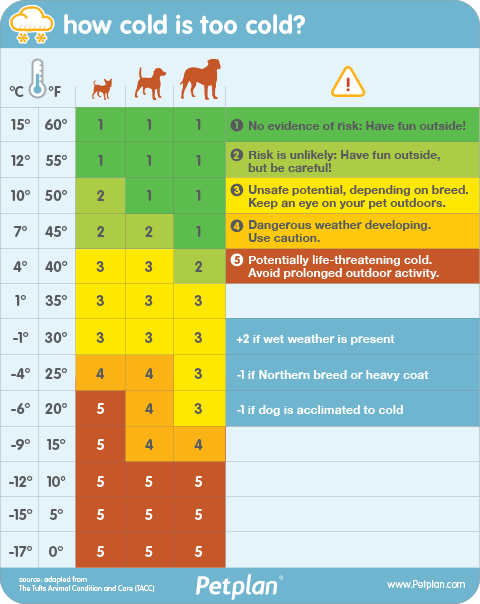
Of course, you’ll also want to consider your dogs’ own health, lifestyle, and preference for the cold. But, as a general rule, Smyth says, “Under 30 degrees, factoring in the wind chill, it’s not going to be safe for any dog to be outside for an extended period of time.”
Of course, every dog is different. But, even if your dog loves being outside in winter weather – and temperatures aren’t too dangerously low to allow for a quick walk – dog owners should still follow a few simple precautions to stay safe:
1. Bundle Up!
Whether it’s 60-degrees or -6, make sure you’re appropriately dressed for your own safety and that of your dog, too. Wear comfortable shoes that won’t slip and slide on ice and snow (especially if your dog tends to pull!). Keep hands warm with mittens or gloves so that you don’t lose your grip on the leash. Remember, to best protect your dog during harsh winter weather, you’ll need to keep yourself protected, too.
2. Bundle Your Dog Up!
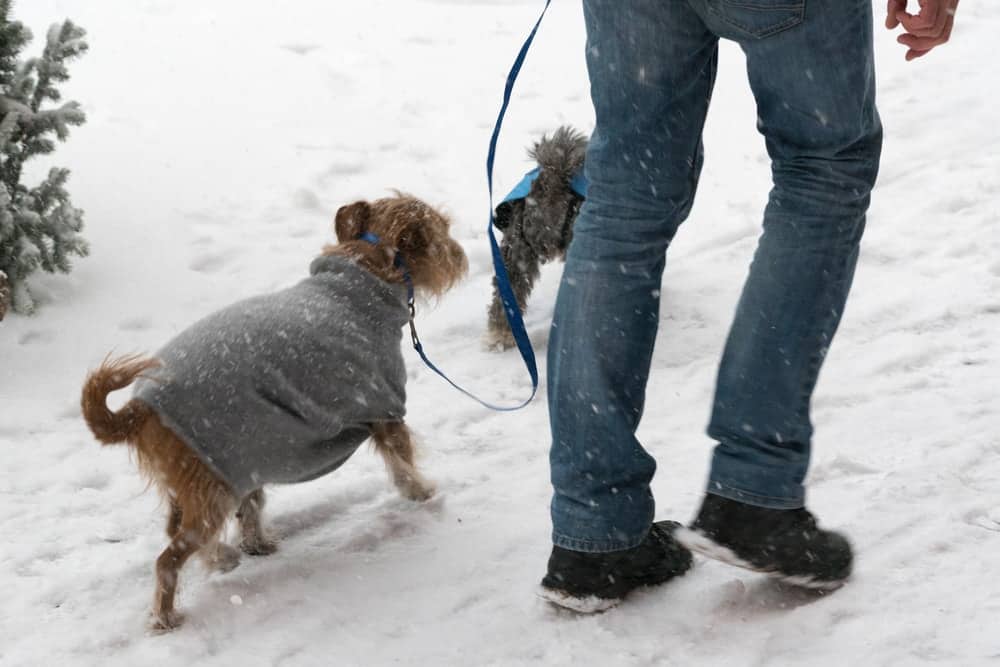
Although some dog breeds (like Alaskan Malamutes, Huskies, and Saint Bernards) are perfectly suited to venture out into the cold au naturale, many dogs will be safer and more comfortable with a coat or sweater to protect them from the elements. Aside from small dogs and dogs with short hair, those that are very young, very old, or with any illness or physical disability that would limit their ability to keep themselves warm should bundle up before heading outside in the cold of winter. If the air is cold, but dry, you might opt for a cozy sweater. Or, if it’s rainy or snowy out, a rain-slicker or water-resistant coat would be a better choice.
3. Protect the Paws!
Yes, your dog’s paws are pretty amazing, but they aren’t immune to the blistering cold and they must be protected from potential dangers like ice, snow, salts, ice-melting chemicals, and sharp objects hidden beneath the snow. If your dog will tolerate them (and it may take some training) the very best winter walking defense is a pair of water-resistant dog booties. But, some dogs simply flat-out refuse to wear their shoes. For those pups that won’t wear booties, always use a paw protectant, like Musher’s Secret to protect those precious paws. And, when you return from your walk, give those paws a good washing to remove any ice or snow that may have built up between toes and to rinse away any salts or toxic chemicals that may have been stepped in.
4. Always Use a Leash!
Even if your dog is 100% trustworthy and has never run off, never attempt to walk him in winter weather without a leash. Ice and snow on the ground can make it difficult for a lost dog to find his way back home and, limited visibility can make it difficult for others to see you.
5. Avoid Potential Dangers!
Stay away from ponds, even when they appear completely frozen solid. Follow paths and sidewalks that you’re familiar with, as snow cover may hide uneven walkways, tree limbs, or sharp objects that could injure you or your dog. Avoid driveways where antifreeze may have dripped. Stay clear of freshly salted or de-iced roads, especially if your dog isn’t wearing protective booties, as salts and chemicals can be irritating to the skin at the very least, or life-threatening at most. Remember to use pet-safe ice melter on your own driveway and sidewalks and encourage surrounding neighbors to do the same.
6. Listen to Your Dog!
While some dogs make it very obvious when they’re not interested in being out in the cold or snow, others may give more subtle signs that they’re uncomfortable. If your dog appears to be shivering or shaking, gives any indication that she’s afraid or hesitant, or tries to pull you back toward home, don’t force her to take the walk. Instead, take her back home to warm up and try exercising her indoors!
And, if winter walks are out of the question, it’s easy to exercise your dog indoors!






















Rock salt used to melt ice and snow can burn their delicate pads and become lodged between their toes, where it can cause more damage.